render阶段-completeWork中的diff
Diff
diff比较发生在什么时候?
diff 算法发生在:beginWork 和 completeWork:
reconcileChildFibers是React Diff真正的入口函数
参考:render阶段-mountIndeterminateComponent构建fiber树
### completeWork阶段:生成实例
## beginWork第3步-Reconciliation-双缓存-diff
相关概念
React 17 diff 算法(协调算法)进行了优化,这个新的算法被称为"Concurrent Mode"(并发模式)。Concurrent Mode 使得 React 更具响应性,可以更好地处理大型应用程序,并改善了用户体验
Concurrent Mode(并发模式): Concurrent Mode 是 React 17 中引入的新模式,它允许 React 在渲染和协调工作中更好地分配时间,从而提高应用程序的响应性。在 Concurrent Mode 中,React 会将工作分为多个优先级,以便更好地响应用户输入并在不阻塞主线程的情况下执行工作。这有助于防止页面卡死,即使在执行耗时操作时也能够保持用户界面的流畅性。
Fiber架构: 在 Concurrent Mode 中,React 使用了 Fiber 架构。Fiber 是一种数据结构,用于表示组件树,并且允许 React 在执行渲染和协调工作时更好地控制任务的中断和继续。这允许 React 在不同优先级之间切换工作,以便及时响应用户操作。
增量更新: 在 React 17 中,Diff 算法的一个重要变化是引入了增量更新。传统的 Diff 算法是一次性遍历整个虚拟 DOM 树,找到需要更新的节点,然后一次性更新它们。这在大型应用中可能会导致性能问题。在增量更新中,React 可以中断渲染和协调工作,以响应更高优先级的任务。这使得 React 能够更好地将工作分散到多个帧中,从而提高了用户界面的响应性。
Batching(批处理): 在 Concurrent Mode 中,React 会将多个状态更新合并为一个批处理,然后一次性更新虚拟 DOM。这可以减少渲染的次数,提高性能。React 会根据浏览器的空闲时间来安排批处理的执行。
中断和继续: Fiber 架构允许 React 在执行渲染和协调工作时中断当前任务,并在稍后继续。这有助于确保及时响应用户输入。React 可以根据任务的优先级来中断工作,以执行更高优先级的任务,然后在空闲时继续低优先级任务的执行。
React Diff三大策略
- tree diff;
- component diff;
- element diff;
PS: 之前H5开发遇到的State 更新但视图未更新的Bug就是element diff检测导致。解决方案:
- 两种业务场景下的DOM节点尽量避免雷同;
- 两种业务场景下的DOM节点样式避免雷同;
当前存在一个DOM节点,触发了一次更新,那么在协调的过程中,会有四种节点和该节点相关联:
- 该DOM节点本身
- workInProgress fiber,更新过程中产生的workInProgress Tree中的fiber节点(即current fiber.alternate)
- current fiber,在页面中已经渲染了的DOM节点对应的fiber节点(即workInProgress fiber.alternate,也就是上 一次更新中产生的workInProgress fiber)
- ReactElement,更新过程中,ClassComponent的render方法或FunctionComponent的调用结果。 ReactElement中包含描述DOM节点的信息。
effectTag
用于保存要执行DOM操作的具体类型的。 effectTag通过二进制表示:
//...
// 意味着该Fiber节点对应的DOM节点需要插入到页面中。
export const Placement = /*                    */ 0b000000000000010;
//意味着该Fiber节点需要更新。
export const Update = /*                       */ 0b000000000000100;
export const PlacementAndUpdate = /*           */ 0b000000000000110;
//意味着该Fiber节点对应的DOM节点需要从页面中删除。
export const Deletion = /*                     */ 0b000000000001000;
//...
diff具体
diff 比较,在构建 workInProgress fiber tree 的过程中,判断 current fiber tree 中的 fiber node 是否可以被 workInProgress fiber tree 复用。
- 能被复用,意味在本次更新中,需要做: 组件的 update 以及 dom 节点的 move、update 等操作;
- 不可复用,则意味着需要做: 组件的 mount、unmount 以及 dom 节点的 insert、delete 等操作。
diff的过程,也就是effect的收集过程,此过程会找出所有节点的变更,如节点新增、删除、属性变更等,这些变更 react 统称为副作用(effect),随着所有的节点(工作单元)在帧空闲时间逐个执行完毕,最后产出的结果是effect list,从中可以知道哪些节点更新、哪些节点增加、哪些节点删除了。
当更新完成以后,fiberRootNode 的 current 指针会指向 workInProgress fiber tree,作为下一次更新的 current fiber tree
最后,深度调和子节点,渲染视图 遍历fiber树,以workInProgress 作为最新的渲染树,即current Fiber 树。
diff逻辑
判断当前节点的更新属于哪种情况
如果是新增,执行新增逻辑
如果是删除,执行删除逻辑
如果是更新,执行更新逻辑
为了降低算法复杂度,React 的 diff 会预设三个限制:
- 只进行同层比较。
tree 层级
component 层级
element 层级
- 新、旧节点的 type 不同,直接删除旧节点,创建新节点。如:元素由 div 变为 p,React会销毁div及其子孙节点,并新建p` 及其子孙节点。
- 通过 key 来复用节点。
单节点和多节点
从 Diff 的入口函数 reconcileChildFibers 出发,判断子元素的类型,若不是数组进入单节点diff,否则进入多节点diff
单节点先判断 key 是否相同
- 如果 key 相同,再看 type
- type 相同,复用;
- type 不同,全部删掉(包括它和它的兄弟元素,因为既然 key 一样,唯一的可能性都不能复用,则剩下的 fiber 都没有机会了);
- 如果 key 不同,只删除该child,再找到它的兄弟节点(child.silbing)的 key,直到找到key相同的节点,再同上操作
多节点diff
归纳只有 3 种情况,更新节点、增减节点、位置变化,由于是单向的链表(newChildren[0]与fiber比较,newChildren[1]与fiber.sibling比较),所以不能像 vue 一样用双指针遍历,所以这里逻辑要经过两轮遍历:
- 第一轮遍历:比较 key,
- 可复用,继续遍历 (新节点 i++,老节点child.silbing),
- 不可复用,就停止第一轮遍历,进入第二轮遍历,有 2 种不可复用的情况
key 不同,直接停止
key 相同,type 不同,标记删除,停止
- 第二轮遍历:
- 老节点遍历完了,新节点还有,则将剩下的新节点插入
- 新节点遍历完了,老节点还有,则将剩下的老节点删除
- 新老节点都还有,则移动顺序,这是 diff 算法最精髓也是最难懂的部分,规则:遍历新节点,每个新节点有 2 个 index,一个 index 表示它在旧节点的位置,另一个 index 表示遍历中遇到的最大旧节点的位置,用 oldIndex 和 maxIndex 表示
当 oldIndex>maxIndex 时,将 oldIndex 的值赋值给 maxIndex
当 oldIndex=maxIndex 时,不操作
当 oldIndex<maxIndex 时,将当前节点移动到 index 的位置
图
workInProgress Fiber(内存中构建的树)和current Fiber-->双缓存
- workInProgress Fiber tree:内存中构建的树
更新过程中构建的 new fiber tree
- current Fiber tree正在视图层渲染的树:真实dom对应在内存中的Fiber节点形成Fiber树
old fiber tree,对应当前屏幕显示的内容,通过根节点 fiberRootNode 的 current 指针可以访问。
workInProgress Fiber和current Fiber这两颗树的节点通过alternate相连.
performUnitOfWork 作用创建下一个 Fiber 节点,并赋值给 workInProgress,同时把 workInProgress 与已创建的 Fiber 节点连接起来构成 Fiber 树。
性能优化之2:Fiber的存在使异步可中断的更新成为了可能
- Fiber的存在使异步可中断的更新成为了可能,作为工作单元,可以在时间片内执行工作,没时间了交还执行权给浏览器,下次时间片继续执行之前暂停之后返回的Fiber
从而使得浏览器处理时候可以将控制权交出去,避免了js线程过多占用而阻塞渲染线程,实现了更细粒度的调度,即为:协程和线程的调度
- Fiber可以在reconcile的时候进行相应的diff更新,让最后的更新应用在真实节点上
双缓存,以current tree为主,workInProgress tree为辅
双缓存机制是React管理更新工作的一种手段,也是提升用户体验的重要机制。
当React开始更新工作之后,会有两个fiber树,一个current树,是当前显示在页面上内容对应的fiber树。另一个是workInProgress树,它是依据current树深度优先遍历构建出来的新的fiber树,所有的更新最终都会体现在workInProgress树上。
当更新未完成的时候,页面上始终展示current树对应的内容,当更新结束时(commit阶段的最后),页面内容对应的fiber树会由current树切换到workInProgress树,此时workInProgress树即成为新的current树。
最终commit阶段完成时,两棵树会进行切换。 在未更新完成时依旧展示旧内容,保持交互,当更新完成立即切换到新内容,这样可以做到新内容和旧内容无缝切换。
渲染流程中,先复用current树(rootFiber)的alternate 作为 workInProgress。 构建workInProgress Fiber发生在createWorkInProgress中,它能创建或者复用Fiber
- Fiber双缓存可以在构建好wip Fiber树之后切换成current Fiber,内存中直接一次性切换,提高了性能
React中,渲染机制就是React会调用render()函数构建一棵Dom树, 当我们需要对DOM进行事件监听时,首先对VirtualDom进行事件监听,VirtualDom会代理原生的DOM事件从而做出响应。

React中workingProgress Fiber树存在的意义是什么?
在React中最多会同时存在两棵Fiber树,当前显示在页面是current Fiber树,在内存中构建的Fiber树称为workInProgress Fiber树,workingProgress Fiber这棵树是在内存中构建的,构建完成才统一替换,这样不会产生不完全的真实dom。一旦更新完成,react会直接将current树替换成workingProgress Fiber树,以便快速完成DOM的更新。也是react提升性能的一部分

因为 workInProgress Fiber 在更新的过程中,是在内存中构建的,所有速度是非常快的,得到最终更新后的 Fiber,直接替换 Current Fiber。

current Fiber 树有一个 alternate 属性指向 workInProgress Fiber 树,workInProgress Fiber 树内也 有一个alternate 属性指向current Fiber 树

在state/props发生改变的时候,render()函数会被再次调用渲染出另外一棵树,重新渲染所有的节点,构造出新的虚拟Dom tree跟原来的Dom tree用Diff算法进行比较,找到需要更新的地方批量改动,再渲染到真实的DOM上,由于这样做就减少了对Dom的频繁操作,从而提升的性能。
  function createWorkInProgress(current, pendingProps) {
    var workInProgress = current.alternate;
    // 区分是在mount时还是在update时
    if (workInProgress === null) {
      // We use a double buffering pooling technique because we know that we'll
      // only ever need at most two versions of a tree. We pool the "other" unused
      // node that we're free to reuse. This is lazily created to avoid allocating
      // extra objects for things that are never updated. It also allow us to
      // reclaim the extra memory if needed.
      console.log('==createWorkInProgress-->,没有就创建一个')
      workInProgress = createFiber(current.tag, pendingProps, current.key, current.mode);
      workInProgress.elementType = current.elementType;
      workInProgress.type = current.type;
      workInProgress.stateNode = current.stateNode;

      {
        // DEV-only fields
        workInProgress._debugSource = current._debugSource;
        workInProgress._debugOwner = current._debugOwner;
        workInProgress._debugHookTypes = current._debugHookTypes;
      }
      console.log('==createWorkInProgress-->,workInProgress.alternate指定为current')
      workInProgress.alternate = current;
      current.alternate = workInProgress;
    } else {
      // 复用属性
      workInProgress.pendingProps = pendingProps; // Needed because Blocks store data on type.

      workInProgress.type = current.type; // We already have an alternate.
      // Reset the effect tag.

      workInProgress.flags = NoFlags; // The effects are no longer valid.

      workInProgress.subtreeFlags = NoFlags;
      workInProgress.deletions = null;

      {
        // We intentionally reset, rather than copy, actualDuration & actualStartTime.
        // This prevents time from endlessly accumulating in new commits.
        // This has the downside of resetting values for different priority renders,
        // But works for yielding (the common case) and should support resuming.
        workInProgress.actualDuration = 0;
        workInProgress.actualStartTime = -1;
      }
    } // Reset all effects except static ones.
    // Static effects are not specific to a render.


    workInProgress.flags = current.flags & StaticMask;
    // 复用属性
    workInProgress.childLanes = current.childLanes;
    workInProgress.lanes = current.lanes;
    workInProgress.child = current.child;
    workInProgress.memoizedProps = current.memoizedProps;
    workInProgress.memoizedState = current.memoizedState;
    workInProgress.updateQueue = current.updateQueue; // Clone the dependencies object. This is mutated during the render phase, so
    // it cannot be shared with the current fiber.

    var currentDependencies = current.dependencies;
    workInProgress.dependencies = currentDependencies === null ? null : {
      lanes: currentDependencies.lanes,
      firstContext: currentDependencies.firstContext
    }; // These will be overridden during the parent's reconciliation

    workInProgress.sibling = current.sibling;
    workInProgress.index = current.index;
    workInProgress.ref = current.ref;

    {
      workInProgress.selfBaseDuration = current.selfBaseDuration;
      workInProgress.treeBaseDuration = current.treeBaseDuration;
    }

    {
      workInProgress._debugNeedsRemount = current._debugNeedsRemount;

      switch (workInProgress.tag) {
        case IndeterminateComponent:
        case FunctionComponent:
        case SimpleMemoComponent:
          workInProgress.type = resolveFunctionForHotReloading(current.type);
          break;

        case ClassComponent:
          workInProgress.type = resolveClassForHotReloading(current.type);
          break;

        case ForwardRef:
          workInProgress.type = resolveForwardRefForHotReloading(current.type);
          break;
      }
    }

    return workInProgress;
  } // Used to reuse a Fiber for a second pass.
diff算法:比较两颗DOM树的差异
生成将一棵树转换成另一棵树的最小操作次数。即使使用最优的算法,该算法的复杂程度仍为 O(n^3 ),其中 n 是树中元素的数量。
1-3.基于条件下的 O(n)
React 在以下三个假设的基础之上提出了一套 O(n) :
只对同级元素进行Diff;
两个不同类型的元素会产生出不同的树;
开发者可以通过设置 key 属性,来告知渲染哪些子元素在不同的渲染下可以保存不变;
diff算法复杂度达到 O(n),必须保持Virtual DOM 只会对同一个层级的元素进行对比:
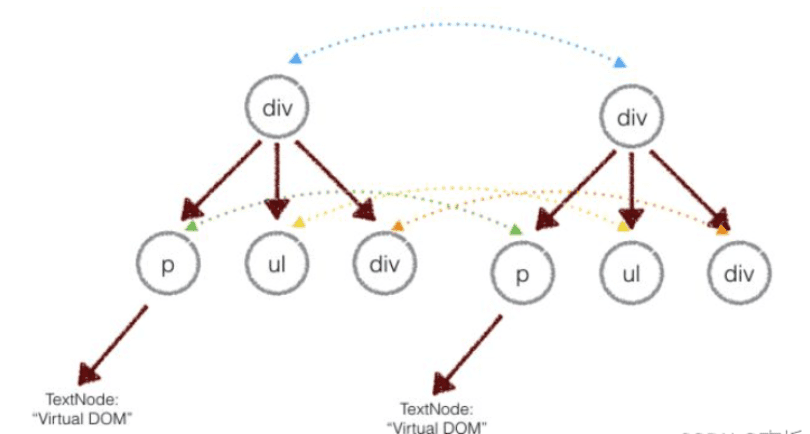
例子中:div只会和同一层级的div对比,第二层级的只会跟第二层级对比。
但是要注意的是,因为tagName是可重复的,不能用这个来进行对比。 所以需要给子节点加上唯一标识key,列表对比的时候,使用key进行对比,这样才能复用老的 DOM 树上的节点。
这样,我们就可以通过深度优先遍历两棵树,每层的节点进行对比,记录下每个节点的差异了
1.深度优先遍历,记录差异
对新旧两棵树进行一个深度优先的遍历,这样每个节点都会有一个唯一的标记:
在深度优先遍历的时候,每遍历到一个节点就把该节点和新的的树进行对比。如果有差异的话就记录到一个对象里面。
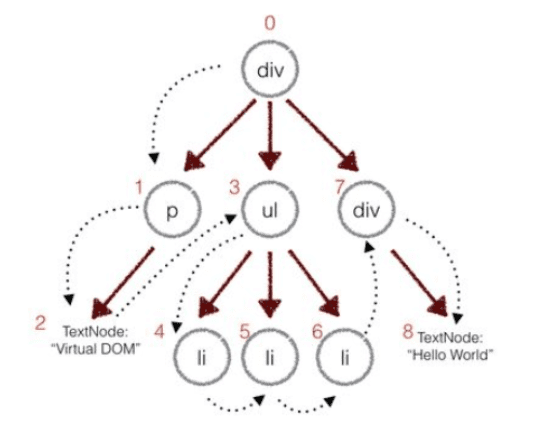
// diff函数,对比两棵树
function diff(oldTree,newTree){
    let index = 0;  // 当前节点的标志
    let patches = {};   //记录每个节点的差异对象
    dfsWalk(oldTree, newTree, index, patches);
    return patches;
}

// 对两棵树进行深度优先遍历
function dfsWalk(oldNode,newNode,index,patches){
    // 对比oldNode和newNode的不同,记录下来
    patches[index] = [...]
    diffChildren(oldNode.children, newNode.children, index, patches)
}

// 遍历子节点
function diffChildren(oldChildren, newChildren, index, patches){
    let leftNode = null;
    let currentNodeIndex = index;
    oldChildren.forEach(function(child,i){
        let newChild = newChildren[i];
        currentNodeIndex = (leftNode && leftNode.count) // 计算节点的标识
      ? currentNodeIndex + leftNode.count + 1
      : currentNodeIndex + 1
        dfsWalk(child, newChild, currentNodeIndex, patches) // 深度遍历子节点
        leftNode = child
    });
}
例如,上面的div和新的div有差异,当前的标记是0,那么:
patches[0] = [{difference}, {difference}, ...] // 用数组存储新旧节点的不同
// 同理p是patches[1],ul是patches[3],类推。
2.只考虑相同等级diff,可以分为下面4中情况:
1. 替换掉原来的节点,例如把上面的div换成了section
2. 修改了节点的属性
3. 移动、删除、新增子节点,例如上面div的子节点,把p和ul顺序互换
4. 对于文本节点,文本内容可能会改变。例如修改上面的文本节点2内容为Virtual DOM 2。
- 第一种。如果节点类型变了,比如下面的p标签变成了h3标签,则直接卸载旧节点装载新节点,这个过程称为REPLACE。
renderA: <ul>
renderB: <ul class: 'marginLeft10'>
=> [addAttribute class "marginLeft10"]
- 第二种情况。节点类型一样,仅仅是属性变化了,这一过程叫PROPS。比如
这一过程只会执行节点的更新操作,不会触发节点的卸载和装载操作。
renderA: <ul>
renderB: <ul class: 'marginLeft10'>
=> [addAttribute class "marginLeft10"]
- 第三种。节点发生了移动,增加,或者删除操作。该过程称为REOREDR。虚拟DOM Diff算法解析
- 第四种。只是文本变化了,TEXT过程。该过程只会替换文本。
- 如果在一些节点中间插入一个F节点,简单粗暴的做法是:卸载C,装载F,卸载D,装载C,卸载E,装载D,装载E。如下图: 这种方法显然是不高效的。 而如果给每个节点唯一的标识(key),那么就能找到正确的位置去插入新的节点。
3.差异类型
假设定义如下:
var REPLACE = 0
var REORDER = 1
var PROPS = 2
var TEXT = 3
对于节点替换,很简单。判断新旧节点的tagName和是不是一样的,如果不一样的说明需要替换掉。如div换成section,就记录下:
patches[0] = [{
  type: REPALCE,
  node: newNode // el('section', props, children)
}]
如果给div新增了属性id为container,就记录下:
patches[0] = [{
  type: REPALCE,
  node: newNode // el('section', props, children)
}, {
  type: PROPS,
  props: {
    id: "container"
  }
}]
如果是文本节点,如上面的文本节点2,就记录下:
patches[2] = [{
  type: TEXT,
  content: "Virtual DOM2"
}]
那如果把我div的子节点重新排序呢?例如p, ul, div的顺序换成了div, p, ul。这个该怎么对比?
如果按照同层级进行顺序对比的话,它们都会被替换掉。如p和div的tagName不同,p会被div所替代。

最终,三个节点都会被替换,这样DOM开销就非常大。

而实际上是不需要替换节点,而只需要经过节点移动就可以达到,我们只需知道怎么进行移动。
最后把差异应用到真正的DOM树上
因为步骤一所构建的 JavaScript 对象树和render出来真正的DOM树的信息、结构是一样的。
所以我们可以对那棵DOM树也进行深度优先的遍历,遍历的时候从步骤二生成的patches对象中找出当前遍历的节点差异,然后进行 DOM 操作
function patch (node, patches) {
  var walker = {index: 0}
  dfsWalk(node, walker, patches)
}

function dfsWalk (node, walker, patches) {
  var currentPatches = patches[walker.index] // 从patches拿出当前节点的差异

  var len = node.childNodes
    ? node.childNodes.length
    : 0
  for (var i = 0; i < len; i++) { // 深度遍历子节点
    var child = node.childNodes[i]
    walker.index++
    dfsWalk(child, walker, patches)
  }

  if (currentPatches) {
    applyPatches(node, currentPatches) // 对当前节点进行DOM操作
  }
}
applyPatches,根据不同类型的差异对当前节点进行 DOM 操作:
function applyPatches (node, currentPatches) {
  currentPatches.forEach(function (currentPatch) {
    switch (currentPatch.type) {
      case REPLACE:
        node.parentNode.replaceChild(currentPatch.node.render(), node)
        break
      case REORDER:
        reorderChildren(node, currentPatch.moves)
        break
      case PROPS:
        setProps(node, currentPatch.props)
        break
      case TEXT:
        node.textContent = currentPatch.content
        break
      default:
        throw new Error('Unknown patch type ' + currentPatch.type)
    }
  })
}
Diff的入口函数为 reconcileChildren
ChildReconciler内部定义了许多协调相关的函数,并将reconcileChildFibers作为函数的返回值。
内部会通过current === null 区分当前fiber节点是mount还是update:
mount-->mountChildFibers
update-->reconcileChildFibers
/*
* shouldTrackSideEffects为true时会为生成的fiber节点收集effectTag属性,反之不会进行收集effectTag属性。
* */
export const reconcileChildFibers = ChildReconciler(true);
export const mountChildFibers = ChildReconciler(false);

function ChildReconciler(shouldTrackSideEffects) {
    //...

    function reconcileChildrenArray(
        returnFiber: Fiber,
        currentFirstChild: Fiber | null,
        newChildren: Array<*>,
        lanes: Lanes,
    ): Fiber | null {
        //...
    }

    function reconcileChildrenIterator(
        returnFiber: Fiber,
        currentFirstChild: Fiber | null,
        newChildrenIterable: Iterable<*>,
        lanes: Lanes,
    ): Fiber | null {
        //...
    }

    function reconcileSingleTextNode(
        returnFiber: Fiber,
        currentFirstChild: Fiber | null,
        textContent: string,
        lanes: Lanes,
    ): Fiber {
        //...
    }

    function reconcileSingleElement(
        returnFiber: Fiber,
        currentFirstChild: Fiber | null,
        element: ReactElement,
        lanes: Lanes,
    ): Fiber {
        //...
    }

    function reconcileSinglePortal(
        returnFiber: Fiber,
        currentFirstChild: Fiber | null,
        portal: ReactPortal,
        lanes: Lanes,
    ): Fiber {
        //...
    }

    // This API will tag the children with the side-effect of the reconciliation
    // itself. They will be added to the side-effect list as we pass through the
    // children and the parent.
    function reconcileChildFibers(
        returnFiber: Fiber,
        currentFirstChild: Fiber | null,
        newChild: any,
        lanes: Lanes,
    ): Fiber | null {
        //...
    }

    return reconcileChildFibers;
}
reconcileChildFibers是React Diff真正的入口函数
reconcileChildFibers内部会根据newChild(即新生成的ReactElement)的类型和$$typeof属性调用不同的处理函数。
据newChild中节点的数量把Diff分为两种类型:
1. 当newChild只有一个节点,也即newChild类型为object、number、string时,我们会进入单节点的Diff
2. 当newChild有多个节点,也即类型为Array时,进入多节点的Diff
// 根据newChild进入不同Diff函数处理
function reconcileChildFibers(
  returnFiber: Fiber,
  currentFirstChild: Fiber | null,
  newChild: any,
): Fiber | null {
  //...

  if (typeof newChild === 'object' && newChild !== null) {
    // object类型,可能是 REACT_ELEMENT_TYPE 或 REACT_PORTAL_TYPE
    switch (newChild.$$typeof) {
      case REACT_ELEMENT_TYPE:
        // 调用 reconcileSingleElement 处理
      // ...
    }
  }

  if (typeof newChild === 'string' || typeof newChild === 'number') {
    // 调用 reconcileSingleTextNode 处理
    // ...
  }

  if (isArray(newChild)) {
    // 调用 reconcileChildrenArray 处理
    // ...
  }

  if (getIteratorFn(newChild)) {
    // 调用 reconcileChildrenIterator处理
    // ...
  }

  // ...

  // 如果以上分支都没有命中,则删除节点
  return deleteRemainingChildren(returnFiber, currentFirstChild);
}
三.单节点的Diff
根据newChild(即新生成的ReactElement)为单一节点,但此节点在current fiber tree中对应的层级具有多少个节点我们是不确定的, 因此我们可以根据此节点在current fiber tree中对应的层级的节点数量分为三种场景:
- 对应层级存在单个旧节点
旧: A
新: A'
- 对应层级存在多个旧节点
旧: A -> B -> C
新: A'
- 对应层级无旧节点
旧: null
新: A'
场景1和场景2我们可以归为一类(即在当前层级中,current fiber在sibling方向的链表中至少存在一个节点), 场景3单独为一类(当前层级无current fiber节点)。
3-1.当前层级的current fiber在sibling方向的链表不为空
此时我们需要循环遍历当前层级在sibling方向的链表的所有current fiber节点,判断是否可以复用(key相同且type相同).
当前层级的current fiber节点的stateNode(即复用fiber节点对应的DOM节点),可以则以current fiber作为副本生成 workInProgress fiber。当前层级所有的current fiber节点都无法复用时,直接生成一个新的fiber节点作为workInProgress fiber。
3-2.当前层级的current fiber在sibling方向的链表为空
由于不存在对应的current fiber节点,所以直接生成一个新的fiber节点作为workInProgress fiber。
3-2.reconcileSingleElement的具体实现
function reconcileSingleElement(
  returnFiber: Fiber,
  currentFirstChild: Fiber | null,
  element: ReactElement,
  lanes: Lanes,
): Fiber {
  const key = element.key;
  let child = currentFirstChild;

  //循环遍历当前这一层级的current fiber节点
  while (child !== null) {
    if (child.key === key) {
      //  key相同, 判断当前 current fiber.elementType 是否等于 ReactElement.type
      switch (child.tag) {
        //...
        default: {
          if (child.elementType === element.type) {
            //  type相同,表示可以复用当前fiber节点, 由于是单节点,所以如果当前节点存在兄弟节点, 需要给兄弟节点打上Deletion effectTag(删除兄弟节点)
            deleteRemainingChildren(returnFiber, child.sibling);
            // 构造workInProgress fiber节点,构造过程中会复用当前fiber节点的stateNode, 即复用DOM对象
            const existing = useFiber(child, element.props);
            existing.ref = coerceRef(returnFiber, child, element);
            existing.return = returnFiber;
            return existing;
          }
          break;
        }
      }
      // key相同但type不相同,则找到了当前节点在上次更新时对应的节点,但两个节点的type已经不一致,并且后续节点也没有可能进行复用,所以删除当前current fiber节点以及节点的剩余兄弟节点
      deleteRemainingChildren(returnFiber, child);
      break;
    } else {
      // key不一致则给当前current fiber节点打上Deletion effectTag,删除当前节点,并继续往下一个兄弟节点遍历,尝试匹配
      deleteChild(returnFiber, child);
    }
    child = child.sibling;
  }

  //DOM节点不可复用 新建fiber作为ReactElement对应的WorkInProgress Fiber
  const created = createFiberFromElement(element, returnFiber.mode, lanes);
  created.ref = coerceRef(returnFiber, currentFirstChild, element);
  created.return = returnFiber;
  return created;
}
注意,在为current fiber节点不匹配并打上Deletion effectTag时, 会同时将其添加到父节点的effectList中 (正常effectList的收集是在completeWork中进行的, 但是被删除的节点会脱离fiber树, 无法进入completeWork的流程, 所以在beginWork阶段提前加入父节点的effectList);
四.多节点的Diff
当newChild为多节点时,以下的几种场景中会触发多节点的Diff。
- 节点更新
//节点属性发生变更;
//旧
<div key="a">a</div>
<div key="b">b</div>
<div key="c">c</div>

//新
<div key="a" className="a">a</div>
<div key="b">b</div>
<div key="c">c</div>

//节点的类型发生变更;
//旧
<div key="a">a</div>
<div key="b">b</div>
<div key="c">c</div>

//新
<span key="a">a</div>
<div key="b">b</div>
<div key="c">c</div>
- 节点的数量发生改变;
//节点属性发生变更;
//旧
<div key="a">a</div>
<div key="b">b</div>
<div key="c">c</div>

//新
<div key="a" className="a">a</div>
<div key="b">b</div>
<div key="c">c</div>

//节点的类型发生变更;
//旧
<div key="a">a</div>
<div key="b">b</div>
<div key="c">c</div>

//新
<span key="a">a</div>
<div key="b">b</div>
<div key="c">c</div>
- 节点的位置发生改变;
//旧
<div key="a">a</div>
<div key="b">b</div>
<div key="c">c</div>
<div key="e">e</div>

//新
<div key="a">a</div>
<div key="c">c</div>
<div key="b">b</div>
<div key="e">e</div>
在reconcileChildFibers的分析中可以看到,React使用两个函数reconcileChildrenArray(针对数组类型)和 reconcileChildrenIterator(针对可迭代类型)来进行多节点的diff,我们重点看看reconcileChildrenArray。
/*
* 其中参数currentFirstChild指的是current fiber tree在该层级中的第一个fiber,通过 fiber.sibling
* 可以得到一条从左到右串联currentFirstChild在当前层级的所有fiber节点的链表,我们使用oldFiber来表示这条链表。
*
* 参数newChildren是一个数组,包含了当前层级的所有ReactElement对象。
* */
function reconcileChildrenArray(
  returnFiber: Fiber,
  currentFirstChild: Fiber | null,
  newChildren: Array<*>,
  lanes: Lanes,
): Fiber | null {
  //...
}
reconcileChildrenArray会对比这两个序列之间的差异,并生成workInProgress fiber tree在当前层级的fiber节点链表, 并使用resultingFirstChild作为头节点。对比的过程会经历两轮的遍历。
4-1.第一轮遍历
- 遍历比较newChildren与oldFiber,判断DOM节点是否可复用。
- 如果可复用,则复用oldFiber生成newFiber并加入到以resultingFirstChild 作为头节点的序列(后续我们使用newFiberList表示此序列)中,两个序列都跳到下一个节点。
- 如果不可复用,分两种情况进行处理:
- 若key不一致,则立即终止第一轮遍历。
- 若key相同但type不同,则删除当前oldFiber节点,生成新的fiber节点加入到newFiberList中,两个序列都跳到下一个节点,继续遍历。
- 当两个序列中的任意一个序列完成遍历(即newIdx >= newChildren.length - 1 || oldFiber.sibling === null),则结束第一轮遍历。
4-2.第二轮遍历
第一轮遍历后,会产生四种结果。
- oldFiber与newChildren都完成遍历了
此时本轮diff已经完成了。这种情况是最理想的情况,只需要进行第一轮遍历中对应的更新操作。
- oldFiber遍历完了,但newChildren还没遍历完。
- newChildren遍历完了,但oldFiber还没遍历完
- newChildren与oldFiber都没完成遍历
4-2-1.oldFiber遍历完了,但newChildren还没遍历完
假设newFiberList中所有节点都可以是可以直接复用的,那么当前场景和我们之前讨论过的新增节点的场景是一致的。
//新增节点
//旧
<div key="a">a</div>
<div key="b">b</div>
<div key="c">c</div>

//新
<div key="a">a</div>
<div key="b">b</div>
<div key="c">c</div>
<div key="d">d</div>
<div key="e">e</div>
这意味着未遍历完的newChildren节点都是新增的,我们需要遍历剩下的newChildren,生成对应的workInProgress fiber并标记上Placement。
此处只是假设第一轮遍历中所有加入到newFiberList的节点都是可以复用的,便于大家理解,但前面我们有分析过,在第一轮遍历中能够加入到
newFiberList的节点有两种:
1. 可以直接复用的节点;
2. key相同但type不同的节点;
4-2-2 newChildren遍历完了,但oldFiber还没遍历完
我们再次假设加入到newFiberList中所有节点都可以是可以直接复用的,这次就和我们之前讨论过的删除节点的场景是一致的了
//旧
<div key="a">a</div>
<div key="b">b</div>
<div key="c">c</div>

//新
<div key="a">a</div>
此时newChildren节点都已经找到了可复用的节点,我们需要遍历剩下的oldFiber,并标记上Deletion。
4-2-2 newChildren与oldFiber都没完成遍历
这意味着这次更新中有可能存在节点改变了位置。我们以前面提到的位置移动的例子来进行分析。
//旧
<div key="a">a</div>
<div key="b">b</div>
<div key="c">c</div>
<div key="e">e</div>

//新
<div key="a">a</div>
<div key="c">c</div>
<div key="b">b</div>
<div key="e">e</div>
经过第一轮遍历后,key值为a的节点复用oldFiber节点生成newFiber节点,并加入到了newFiberList中。在进行第二个节点的比较时, 新节点c和旧节点b的key值不一致,此时我们会终止第一轮遍历,进入第二轮遍历。 由于可能存在移动的节点,所以节点的索引值不能够找出两个对应的节点,我们需要一个找到新旧节点对的方法。这时,节点的key值就起作用了。 我们前面提到:
开发者可以通过设置 key 属性,来告知渲染哪些子元素在不同的渲染下可以保存不变;
React会将还未处理的oldFiber节点存入以节点key为key,oldFiber为value的Map中。
//existingChildren 是一个以节点key为key,oldFiber为value的Map
const existingChildren = mapRemainingChildren(returnFiber, oldFiber);
然后继续遍历newChildren序列,并通过newChildren节点的key来查询existingChildren中是否存在key相同的oldFiber节点。
接下来我们需要通过第二轮遍历去标记哪些节点可以复用,哪些节点需要移动。此时我们需要一个参照索引来判断节点是否需要移动。
我们以newFiberList中最靠右的节点对应的oldFiber在oldFiber链表中的位置索引oldIndex作为参照索引,并使用lastPlacedIndex表示参照索引。
上面分析的例子中,在结束第一轮遍历后,lastPlacedIndex就是newFiberList的最右一个节点a的oldIndex,也就是0。
然后开始第二轮的遍历
- newChildren节点c
newChildren节点c通过existingChildren查询到了oldFiber节点c,发现oldFiber节点c的索引oldIndex为 2 ,大于lastPlacedIndex=0。
由lastPlacedIndex的定义可知,若当前的oldIndex大于lastPlacedIndex,意味着oldFiber节点c的位置是在newFiberList的最右一个节点对应的 oldFiber节点的右边。同时,由于newChildren序列是按顺序遍历的,所以当前的newChildren生成的newFiber节点一定是在newFiberList的最右一个节点对应的newFiber节点的右边。因此,节点c更新前后的位置没有发生。
此时,因为节点c的oldIndex > lastPlacedIndex,所以我们把lastPlacedIndex的值更新为节点c的oldIndex=2。同时把节点c生成的newFiber加入到newFiberList中,继续遍历。
newChildren节点b newChildren节点b通过existingChildren查询到了oldFiber节点b,发现oldFiber节点b的索引oldIndex为 1,小于lastPlacedIndex=2。oldFiber节点b的位置是在newFiberList的最右一个节点对应的oldFiber节点的左边。但newChildren节点b生成的newFiber节点一定是在newFiberList的最右一个节点对应的newFiber节点的右边的。因此,节点b更新前后的位置会发生变化。 此时,因为节点b的oldIndex < lastPlacedIndex,所以lastPlacedIndex不变,并把节点b生成的newFiber标记Placement,表示该节点更新前后的位置会发生变化,最后把newFiber加入到newFiberList中,继续遍历。
newChildren节点d newChildren节点d通过existingChildren查询到了oldFiber节点d,发现oldFiber节点d的索引oldIndex为 3 ,大于lastPlacedIndex=3。 处理逻辑与节点c一致,不再展开。
diff完成,我们也得到了该层级中完整的newFiberList,作为workInProgress fiber tree在该层级的fiber节点。
reconcileChildrenArray的具体实现
  /* * returnFiber:当前层级的节点的父节点,即currentFirstChild的父级fiber节点
     * currentFirstChild:当前层级的第一个current fiber节点
     * newChildren:当前层级的ReactElement节点
     * lanes:优先级相关
  * */
  function reconcileChildrenArray(
    returnFiber: Fiber,
    currentFirstChild: Fiber | null,
    newChildren: Array<*>,
    lanes: Lanes,
  ): Fiber | null {
    //..

    // workInProgress fiber tree在此层级的第一个fiber节点,即该层级上在fiber.sibling方向的链表的头节点,在上面的分析中我们使用newFiberList来表示此序列
    let resultingFirstChild: Fiber | null = null;
    // previousNewFiber用来将后续的新生成的workInProgress fiber连接到newFiberList中
    let previousNewFiber: Fiber | null = null;

    // oldFiber节点,用于访问workInProgress fiber tree在此层级上在fiber.sibling方向的链表
    let oldFiber = currentFirstChild;
    // 用于存储newFiberList中最右边的节点在oldFiber链表中的index
    let lastPlacedIndex = 0;
    // 存储遍历到newChildren的索引
    let newIdx = 0;
    // 存储当前oldFiber的下一个节点
    let nextOldFiber = null;

    // 第一轮遍历
    for (; oldFiber !== null && newIdx < newChildren.length; newIdx++) {
      if (oldFiber.index > newIdx) {
        nextOldFiber = oldFiber;
        oldFiber = null;
      } else {
        nextOldFiber = oldFiber.sibling;
      }

       // 尝试生成新的节点,如果key不同, 返回null,key相同, 再比较type是否一致。type一致则执行useFiber(update逻辑),type不一致则运行createXXX(insert逻辑)
      const newFiber = updateSlot(
        returnFiber,
        oldFiber,
        newChildren[newIdx],
        lanes,
      );
      if (newFiber === null) {
      // newFiber为 null说明节点不可复用,中断当前遍历
        if (oldFiber === null) {
          oldFiber = nextOldFiber;
        }
        break;
      }
      if (shouldTrackSideEffects) {
      // shouldTrackSideEffects 为true 代表当前为update阶段
        if (oldFiber && newFiber.alternate === null) {
          // 此时为key相同但type不同,newFiber.alternate为空,删除掉oldFiber
          deleteChild(returnFiber, oldFiber);
        }
      }

      //更新记录lastPlacedIndex
      lastPlacedIndex = placeChild(newFiber, lastPlacedIndex, newIdx);

      //将newFiber添加到newFiberList中
      if (previousNewFiber === null) {
        resultingFirstChild = newFiber;
      } else {
        previousNewFiber.sibling = newFiber;
      }
      previousNewFiber = newFiber;
      oldFiber = nextOldFiber;
    }

    if (newIdx === newChildren.length) {
      // newChildren遍历完了,删除oldFiber链中未遍历的节点
      deleteRemainingChildren(returnFiber, oldFiber);

      //...
      //结束此次diff
      return resultingFirstChild;
    }

    if (oldFiber === null) {
      // oldFiber遍历完了,新增newChildren未遍历的节点到newFiberList中
      for (; newIdx < newChildren.length; newIdx++) {
        const newFiber = createChild(returnFiber, newChildren[newIdx], lanes);
        if (newFiber === null) {
          continue;
        }
        lastPlacedIndex = placeChild(newFiber, lastPlacedIndex, newIdx);
        if (previousNewFiber === null) {
          resultingFirstChild = newFiber;
        } else {
          previousNewFiber.sibling = newFiber;
        }
        previousNewFiber = newFiber;
      }
      //...
      //结束本次diff
      return resultingFirstChild;
    }

    // newChildren和oldFiber都没有遍历完,将oldFiber剩余序列加入到一个map中,在第二次遍历的过程中能够通过key值找到对应的oldFiber
    const existingChildren = mapRemainingChildren(returnFiber, oldFiber);

    // 第二轮遍历
    for (; newIdx < newChildren.length; newIdx++) {
      const newFiber = updateFromMap(
        existingChildren,
        returnFiber,
        newIdx,
        newChildren[newIdx],
        lanes,
      );
      if (newFiber !== null) {
        if (shouldTrackSideEffects) {
          if (newFiber.alternate !== null) {
            // 如果newFiber是通过复用创建的, 则清理map中对应的老节点
            existingChildren.delete(
              newFiber.key === null ? newIdx : newFiber.key,
            );
          }
        }
        // 判断当前节点是否需要改变位置,并更新记录lastPlacedIndex
        lastPlacedIndex = placeChild(newFiber, lastPlacedIndex, newIdx);
        // 添加newFiber到newFiberList中
        if (previousNewFiber === null) {
          resultingFirstChild = newFiber;
        } else {
          previousNewFiber.sibling = newFiber;
        }
        previousNewFiber = newFiber;
      }
    }

    if (shouldTrackSideEffects) {
      //删除未遍历的oldFiber
      existingChildren.forEach(child => deleteChild(returnFiber, child));
    }


    //...

    //结束本次diff
    return resultingFirstChild;
  }

  //此函数用于记录节点在此次更新中是否需要移动,并返回新的lastPlacedIndex
  function placeChild(
    newFiber: Fiber,
    lastPlacedIndex: number,
    newIndex: number,
  ): number {
    newFiber.index = newIndex;

    //...

    const current = newFiber.alternate;
    if (current !== null) {
      const oldIndex = current.index;
      if (oldIndex < lastPlacedIndex) {
        // 此节点需要移动
        newFiber.flags |= Placement;
        return lastPlacedIndex;
      } else {
        // 此节点不需要移动,返回oldIndex作为lastPlacedIndex的值
        return oldIndex;
      }
    } else {
      // 这是插入的逻辑
      newFiber.flags |= Placement;
      return lastPlacedIndex;
    }
  }